
Hidden Harms Mapping: A Tool for Local Authorities
The Harms Mapping Portal, developed by researchers at the University of Birmingham, provides local councils, police forces, and third-sector partners with a robust methodology for mapping hidden harms at a local level.
Our work, supported by a UK Research and Innovation (UKRI) Future Leaders Fellowship, translates frontline professional expertise into actionable, strategic insight.
The Methodology: Secure Insight Through Comparative Judgement
Our platform operates on Comparative Judgement (CJ), an advanced "wisdom of the crowd" technique.
The process is designed to be both intuitive and secure:
- Comparison: We present frontline safeguarding professionals with pairs of localities (e.g., wards) within their authority.
- Judgement: They are asked a simple question: "Which of these two areas experiences a higher rate of a specific hidden harm?"
- Analysis: This comparative method is often more reliable than estimating absolute risk for a single area.
Crucially, this approach allows professionals to contribute their invaluable local expertise and professional insight without compromising confidentiality.
No identifying individual case information, or even a specific number of cases, is required to participate.
See the Method in Action
To understand the simplicity and efficacy of the comparative judgement process from a user's perspective, we invite you to explore our interactive demonstration.
Visit the Harms Mapping Demo Website
Demonstrating Real-World Impact
We have successfully partnered with numerous local authorities and police forces to map a variety of complex harms, including forced marriage, Female Genital Mutilation (FGM), domestic abuse, and honour-based abuse.
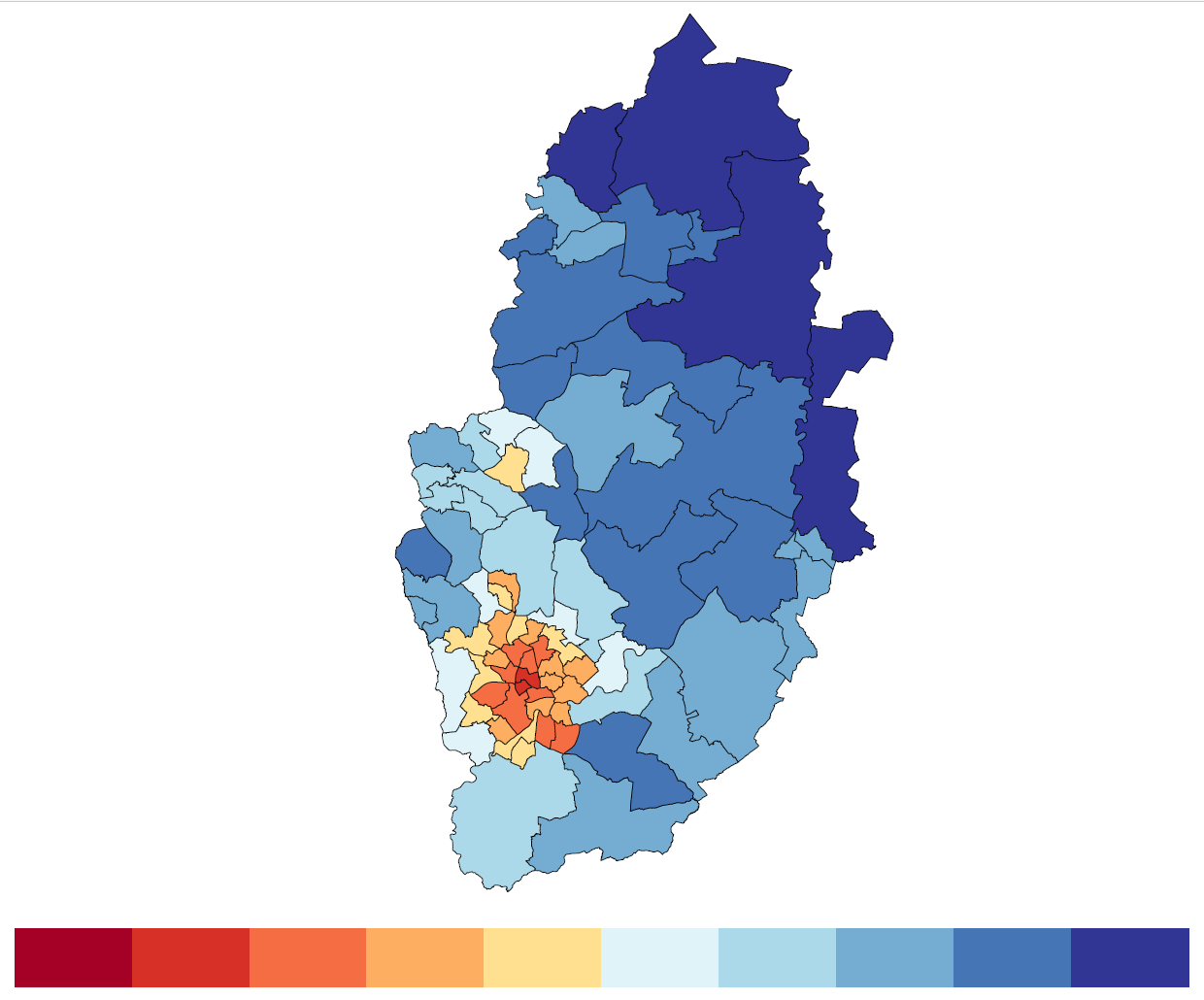
Case Study: Forced Marriage in Nottinghamshire
Our team collaborated with the Nottinghamshire Modern Slavery Partnership to map the risk of forced marriage across the county.
- Process: We collected over 1,800 comparative judgments from 12 local experts.
- Outcome: This analysis successfully identified high-risk areas. In response to partner feedback, we developed and delivered a Continuing Professional Development (CPD) course based on these findings to over 130 local authority staff, embedding the insights directly into frontline practice.
Case Study: Mapping Female Genital Mutilation (FGM) in South Yorkshire
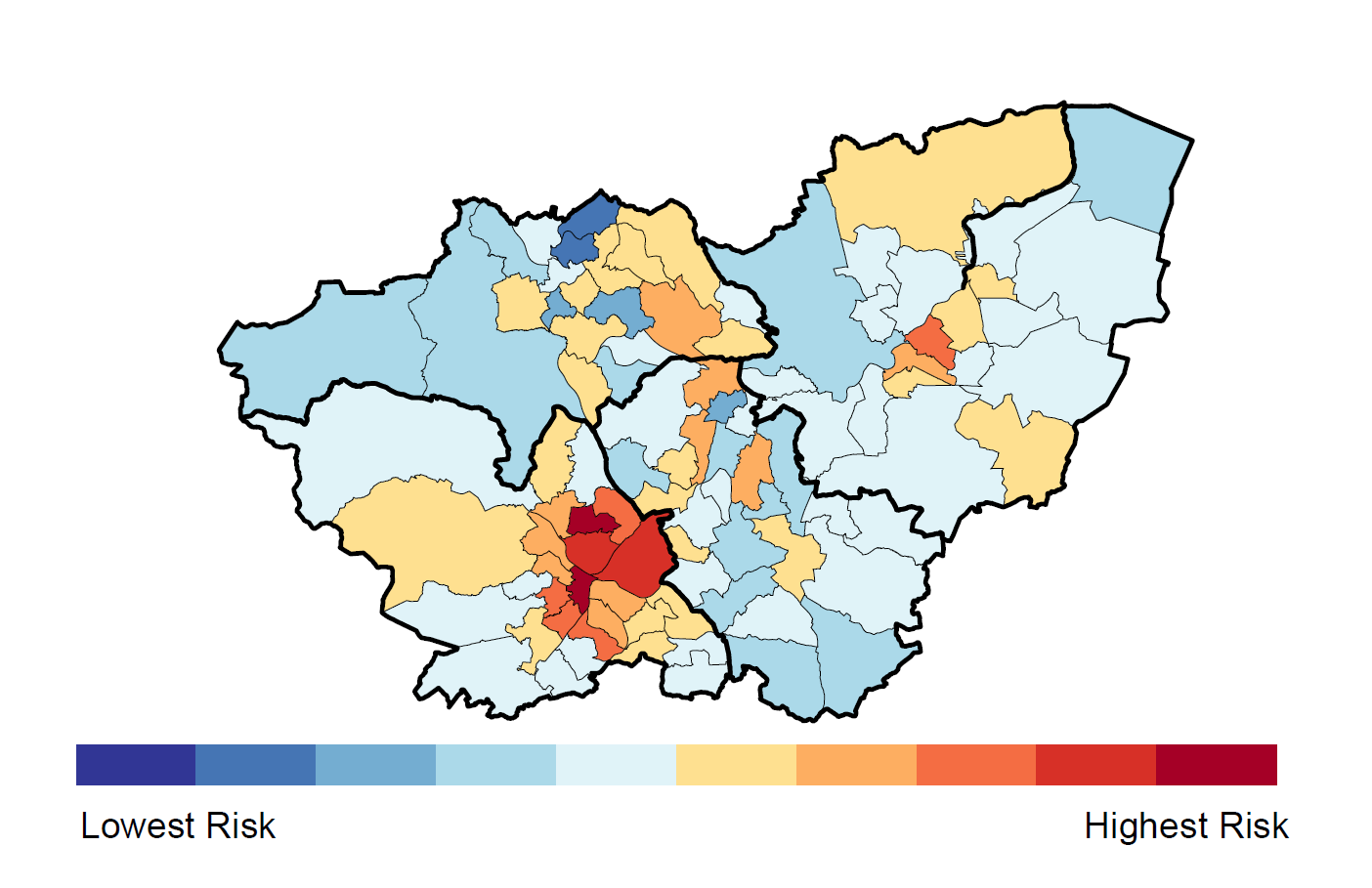
In partnership with the South Yorkshire Police (SYP) Honour Based Abuse Unit, our team conducted a focused study to map the risk of Female Genital Mutilation (FGM) across the region.
- Process: Over a dedicated three-week period in November and December 2022, we collected 877 comparative judgements from 18 specialist participants, including police and expert safeguarding professionals.
- Outcome: The insights generated from this mapping provided a critical new evidence base for South Yorkshire Police. The significance of this work was demonstrated at a national policy level; as a direct result of our findings, two formal questions regarding Honour-Based Abuse were tabled in the House of Commons, addressed to the Home Secretary and the Secretary of State for Health and Social Care, respectively.
Case Study: Domestic Abuse Strategy in Wokingham
In partnership with Wokingham Borough Council and their domestic abuse partnership group, we conducted a study to map domestic abuse at the ward level.
- Process: Local professionals provided judgements on domestic abuse prevalence.
- Outcome: The resulting analysis provided a clear visualisation of hotspot areas, which directly informed the council's ongoing domestic abuse strategy and resource allocation.
The Underpinning Science
Our methodology is built on a rigorous, peer-reviewed scientific foundation.
The team is actively developing a novel statistical method known as the Bayesian Spatial Bradley-Terry model.
This model innovatively combines the pairwise comparisons from the Comparative Judgement process with spatial information to produce highly accurate and reliable harm maps.
Further details on our methods are available in the following publications:
- Seymour, R.G., et al. (2025). Comparative Judgement Modelling to Map Forced Marriage at Local Levels. Annals of Applied Statistics, 19(1).
- Seymour, R.G., & Hernandez, F. (2024). Scalable Bayesian inference for Bradley–Terry models with ties: an application to honour based abuse. Journal of Applied Statistics.
Our data collection and analysis software is open-source and available for review:
- Data Collection Interface: https://github.com/HiddenHarmsHub/comparative-judgement-interface
- Data Analysis Package (speedyBBT): https://github.com/rowlandseymour/speedyBBT